

You are using an out of date browser. It may not display this or other websites correctly.
You should upgrade or use an alternative browser.
You should upgrade or use an alternative browser.
Merry Christmas all.
- Thread starter Ben Brand
- Start date
- Status
- Not open for further replies.


ChinaVoodoo
Moderator


Alpine
Moderator
Merry Christmas to all forum members!
pier
pier


Merry Christmas
Playing Snotit with my oldest grandson

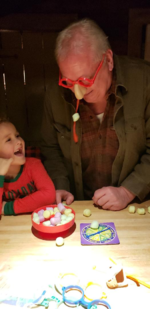
Playing Snotit with my oldest grandson

That second photo is worth framing. Merry Christmas.
Bob
Bob


Petzi
Active Member
Joyeux Noël !
Séb
Séb

col555
Well-Known Member
Merry Christmas everyone

Sometimes I forget how challenging it used to be to translate another language. Before there was an Internet.....a spirit transports us to the recent past...
I could usually recognize the identity of the language, if it was a romance language (i.e. Roman-Latin derived), and could then hope to locate a printed dictionary for that language. Or sometimes the orthography (alphabet characters) would give away the identity of the language.
καλά Χριστούγεννα -- Hey! I think that's Greek! Now, to find a Greek-English dictionary.
счастливого Рождества -- Hmmm. That's either Russian or maybe one of those other languages that uses Cyrillic, like Ukranian.
When it came to east Asian languages, I was screwed. If there was a 中 in there somewhere, then it was likely Chinese. A 日 meant maybe Japan. And 한 suggested Korean. These meager clues came from my childhood hobby of stamp collecting. Gosh. Do I have a Korean-English dictionary on the shelf?
South Asia? Forget about it. And there are not just dozens of different languages, but thousands.
*
*
Today, any text content that can be "selected" on a computer screen can be pasted into GoogleTranslate, and mother Google will even figure out what language it is. And I have noticed over the last few years that the translations themselves are getting better and better. The quality (and computational power) of today's GoogleTranslate artificial intelligence (AI) is breathtaking.
Have a HappAI New Year!
Bob
EDIT: After posting this, my thoughts turned to my humble collection of foreign language dictionaries. They really need a good dusting.
I could usually recognize the identity of the language, if it was a romance language (i.e. Roman-Latin derived), and could then hope to locate a printed dictionary for that language. Or sometimes the orthography (alphabet characters) would give away the identity of the language.
καλά Χριστούγεννα -- Hey! I think that's Greek! Now, to find a Greek-English dictionary.
счастливого Рождества -- Hmmm. That's either Russian or maybe one of those other languages that uses Cyrillic, like Ukranian.
When it came to east Asian languages, I was screwed. If there was a 中 in there somewhere, then it was likely Chinese. A 日 meant maybe Japan. And 한 suggested Korean. These meager clues came from my childhood hobby of stamp collecting. Gosh. Do I have a Korean-English dictionary on the shelf?
South Asia? Forget about it. And there are not just dozens of different languages, but thousands.
*
*
Today, any text content that can be "selected" on a computer screen can be pasted into GoogleTranslate, and mother Google will even figure out what language it is. And I have noticed over the last few years that the translations themselves are getting better and better. The quality (and computational power) of today's GoogleTranslate artificial intelligence (AI) is breathtaking.
Have a HappAI New Year!
Bob
EDIT: After posting this, my thoughts turned to my humble collection of foreign language dictionaries. They really need a good dusting.
- Status
- Not open for further replies.
Similar threads


- Replies
- 30
- Views
- 7K

-
About Us
This forum is dedicated to promoting the American tobacco farmer and tobacco home growers across the globe. Whether you grow by the acre, in your backyard, or in pots, you should find valuable and accurate information here.We discuss any variety of tobacco, as well as numerous approaches to growing, harvesting, curing, and finishing your crop. Our members will attempt to provide experience-based answers to your questions.
-
Buy raw tobacco from our Sponsor - WLT