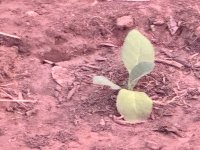
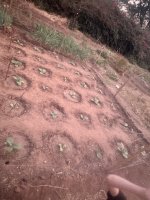
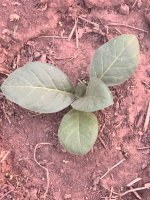
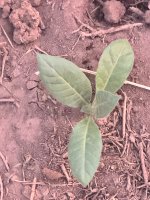
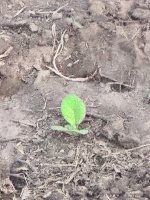
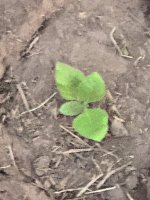
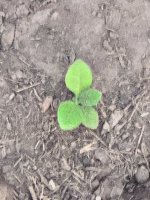
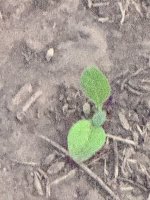
FantomBadger's First Attempt at Tobacco

FantomBadger

Active Member
Joined
Apr 10, 2025
Messages
39
Points
33
Location
Lusaka, Zambia
You may wish to investigate the question of possible interaction or interference between your different biologicals.

Bob
Good evening Sir,

I take you for a reader, so I’ll provide some links to studies I went through, in a lot of cases only read the abstract and discussion, in order for you or other members to read that might find it interesting.

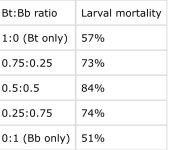
Bt-kurstaki and B. bassiana used to together has been found to be synergistic and also protect against more pests. In theory, Bt stops feeding of the larva and causes it’s metabolism to crash, making the cuticle infection from Beauveria to work quicker.

IMG_3902.jpeg

Sayed, A.M.M. and Behle, R.W. (2017) "Evaluating a dual microbial agent biopesticide with Bacillus thuringiensis var. kurstaki and Beauveria bassiana blastospores." Biocontrol Science and Technology, 27(4): 461–474. DOI: 10.1080/09583157.2017.1303662

Trichoderma and Beauveria work together, as found in a study by Batool et al. The combination killed 98% of Asian corn borer larvae vs 88% for Beauveria alone. No antagonistic or negative effects between the two were observed. Both colonised the plants well and coexisted without reducing each other's efficacy.

Batool, S. et al. (2020) "Synergistic Effect of Beauveria bassiana and Trichoderma asperellum to Induce Maize Defense against the Asian Corn Borer and Larval Immune Response." International Journal of Molecular Sciences, 21(21): 8215. DOI: 10.3390/ijms21218215

Trichoderma and Bacillus, what I intend to use for prevention of soil and leaf diseases, work together against bacterial wilt, but application should be directed at different zones. One applied to the soil, and the other as a foliar application. A follow up study found that they can interfere with each other slightly, if grown together in a lab dish, but at the very worst you might just have or the other taking over where they interfere. Planned for soil drench and foliar spray, not applied as a mix.

Zhou, Y. et al. (2021) "Synergistic Effect between Trichoderma virens and Bacillus velezensis on the Control of Tomato Bacterial Wilt Disease." Horticulturae, 7(11): 439. DOI: 10.3390/horticulturae7110439

Izquierdo-García, L.F. et al. (2024) "Synergistic interactions of Trichoderma virens and Bacillus velezensis to control tomato bacterial wilt." European Journal of Plant Pathology. DOI: 10.1007/s10658-024-02881-6

A study very relevant to what I am doing.
Aynalem et al. tested Beauveria, Metarhizium and Bt together. Applied as single products, pairs, and all three combined, against Tuta absoluta, the tomato leafminer. This is a big threat in my area for tobacco. Basically my whole insect stack in one experiment.
The combined treatments beat the individual products. So the stack should work, as long as each product is used in its own lane.

Aynalem, B. et al. (2022) "Biocontrol competence of Beauveria bassiana, Metarhizium anisopliae and Bacillus thuringiensis against tomato leaf miner, Tuta absoluta." Heliyon, 8(4)

One that I got wrong myself. I sprayed Beauveria and Metarhizium together earlier this week. Both work and interact the same and are competing with each. No harm done, apart from wasting the additional product. Will be applying as separate applications. Beauveria for the leaves and Metarhizium for the soil and stem base.

Notable interactions I have found. Double Nickel for leaf disease is a Bacillus that works by producing antifungal compounds. Beauveria and Metarhizium are fungi. Compatibility studies keep finding that Fungicides are the biggest risk to insect fungi in a spray program.

Shadmehri et al. found that every fungicide, at every concentration tested was incompatible with both Beauveria and Metarhizium. It significantly inhibits spore germination and growth. Tests were done with chemical fungicides, but an antifungal Bacillus will work in the same manner. Double Nickel and the insect fungi applied at least 5 days apart and never from the same tank. To be fair to the other side, one study did find a specific Bacillus strain compatible with Beauveria, so it is strain dependent. But without data on my exact strains, I’ll rather play it safe and not waste the money.

Shadmehri, A.D. et al. (2016) "Compatibility of entomopathogenic fungi Beauveria bassiana and Metarhizium anisopliae with some pesticides."

Khun, K.K. et al. (2021) "Compatibility of Metarhizium anisopliae and Beauveria bassiana with insecticides and fungicides used in macadamia production in Australia." Pest Management Science, 77(2): 709–718. DOI: 10.1002/ps.6069

I think to apply it simply and practically biologicals that attack the same target the same way compete. Biologicals that attack different targets in different places cooperate. Antifungals kills fungi, good and bad. And copper kills everything apply it alone.

It will be very important to log what was applied when and to make notes on actual performance.

Plants tonight after mixed Beauveria and Metarhizium application,

4b309a23-3dc0-4a86-8aed-e5e8a4ee3c51.jpeg
 

FantomBadger

Active Member
Joined
Apr 10, 2025
Messages
39
Points
33
Location
Lusaka, Zambia
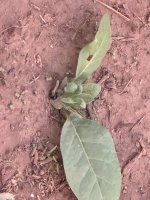
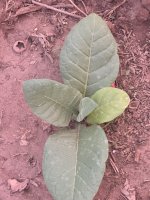
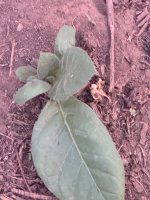
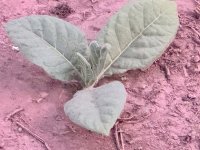
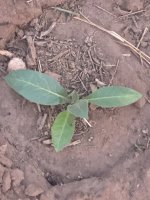
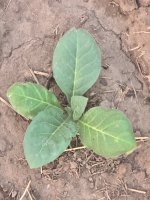
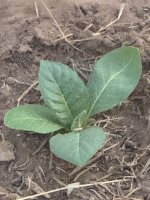
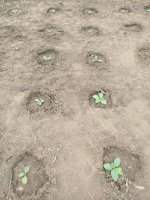
Garden walk update, took photos of smaller and larger plants. Overall I am happy. They didn’t receive water today and no wilting occurred at 32°C.

Broadleaf bed 1,


IMG_3952.jpegIMG_3953.jpegIMG_3954.jpegIMG_3955.jpegIMG_3956.jpegIMG_3957.jpeg

Mixed plant bed, starting to see broader vs sharper leafs. The rounder leafs are burley and Eastern Cape Virginia and the sharper leafs are Old Zimbabwean Virginia. I am not 100% sure, I was away when they were transplanted so just need to map and table that bed.

The lush green plant in photo 6 is a Mapacho plant.

. IMG_3958.jpegIMG_3959.jpegIMG_3960.jpegIMG_3961.jpegIMG_3962.jpegIMG_3963.jpegIMG_3964.jpeg

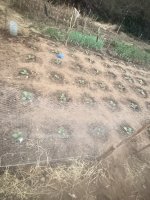
Broadleaf bed 2,


IMG_3965.jpegIMG_3966.jpegIMG_3967.jpegIMG_3968.jpeg

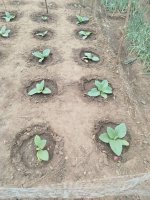
Note for next year, when doing beds, plant on mounds, not basins. They work nicely now, but when the rain comes it can cause water build up and fungal pressure. I am going to see if I can figure out a gutter system. At that stage plants will be bigger and I can make a plan. Pretty silly oversight.

Tomorrow broadleaf field 1 will get an application of 8g LAN and 1g MAP per plant. Will be sprinkled in the basin about 10-15cm from the stem in the evening and then watered deeply, but without runoff. Measuring jug watered at 1.5 liters per plant 1 to 30 and then start at plant 1 again with another 1.5 liters. Marcros for this application is 35kg N/hectare and 3.5kg P/hectare. This is the last phosphate that this plant will receive.

Broadleaf field 2 is getting their first post transplant fertiliser application. Will get 2g of soluble 6:1:3 diluted into 2 liters of water per plant. 8kg N/hectare, 1.3kg P/hectare and 4kg K/hectare.
 

WillQuantrill

Well-Known Member
Joined
Aug 21, 2022
Messages
499
Points
93
Location
Missouri
Garden walk update, took photos of smaller and larger plants. Overall I am happy. They didn’t receive water today and no wilting occurred at 32°C.

Broadleaf bed 1,


View attachment 61123View attachment 61124View attachment 61125View attachment 61126View attachment 61127View attachment 61128

Mixed plant bed, starting to see broader vs sharper leafs. The rounder leafs are burley and Eastern Cape Virginia and the sharper leafs are Old Zimbabwean Virginia. I am not 100% sure, I was away when they were transplanted so just need to map and table that bed.

The lush green plant in photo 6 is a Mapacho plant.

. View attachment 61129View attachment 61130View attachment 61131View attachment 61132View attachment 61133View attachment 61134View attachment 61135

Broadleaf bed 2,


View attachment 61136View attachment 61137View attachment 61138View attachment 61139

Note for next year, when doing beds, plant on mounds, not basins. They work nicely now, but when the rain comes it can cause water build up and fungal pressure. I am going to see if I can figure out a gutter system. At that stage plants will be bigger and I can make a plan. Pretty silly oversight.

Tomorrow broadleaf field 1 will get an application of 8g LAN and 1g MAP per plant. Will be sprinkled in the basin about 10-15cm from the stem in the evening and then watered deeply, but without runoff. Measuring jug watered at 1.5 liters per plant 1 to 30 and then start at plant 1 again with another 1.5 liters. Marcros for this application is 35kg N/hectare and 3.5kg P/hectare. This is the last phosphate that this plant will receive.

Broadleaf field 2 is getting their first post transplant fertiliser application. Will get 2g of soluble 6:1:3 diluted into 2 liters of water per plant. 8kg N/hectare, 1.3kg P/hectare and 4kg K/hectare.
Just a tip I have done before as the plants gain some height you can still add a mound for runoff just compact it nice and firm around the stalk.
 

StoneCarver

Bureau for Paranormal Research and Defense
Joined
Aug 26, 2025
Messages
336
Points
93
Location
Winston-Salem,NC
Imo, with enough humus (organic material) in the soil, water pooling or runoff isn't a worry. The rain will percolate down through the soil just fine whether basin or mound.
The humus also helps keep the soil aerated which reduces the chances of pathogenic fungal infections or bacterial rot in the roots.
 

StoneCarver

Bureau for Paranormal Research and Defense
Joined
Aug 26, 2025
Messages
336
Points
93
Location
Winston-Salem,NC
I suspect that the making of small hills to plant on was a general Native American practice whether corn, beans, tobacco, or whatever.
It just came about from the way they cleared and prepared land to plant on. That's my thoughts.
And so the colonists learned it from the Native people.
It sure would be interesting to take a camera back in time.
 

FantomBadger

Active Member
Joined
Apr 10, 2025
Messages
39
Points
33
Location
Lusaka, Zambia
Just a tip I have done before as the plants gain some height you can still add a mound for runoff just compact it nice and firm around the stalk.
I will definitely look into that, I have about 2 months before the heavy rains start. At that stage I should have nice strong plants with enough stem and sacrificial leaf to make it work. I was planning an overcomplicated guitar system that isn’t necessary.

Plants looking healthy and strong.

Broadleaf 1,
58f8229c-c444-4885-8391-cca77939b519.jpeg

Mixed bed,


fcb9c963-4dd8-4fae-8548-5d85b6b1d1a9.jpeg

Broadleaf 2,

1f1c38ce-f629-4d56-a76f-12b9c9a9cb26.jpeg

I planted out all of them too soon, so that is something I’ll fix next year. So far it seems to be ok and the plants are doing well and growing quickly enough.

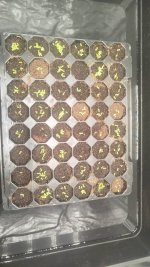
Nursery in the grow tent on 18/6 schedule at 350 PPFD light,

e9bd5909-e8b6-4171-943f-5d8cba43023f.jpeg

They seem a bit yellow, I will reduce the schedule to 16/8 perhaps and see if it is better. First want to check if I haven’t let them dry to much before watering.

I also started playing with label design for the eventual cigars when I was bored. I will post them once I’m done.

I might have access to an old rusty steel tank of about 1000 odd gallons that I think with some work can make a nice kiln and fermentation chamber. Just need to check its condition and then figure out how I am going to make it work and run it. I’ll definitely ask for advice here first.
 

johnny108

Well-Known Member
Joined
Feb 23, 2023
Messages
1,219
Points
113
Location
Germany
Are the seedlings leaves flattened down to the soil, or raised up?
If up: the light isn’t a problem, and the yellowing could be a nitrogen deficiency.
What are you using for a seedling mix?
 
Top