
You are using an out of date browser. It may not display this or other websites correctly.
You should upgrade or use an alternative browser.
You should upgrade or use an alternative browser.
Ancient Tobacco Seeds
- Thread starter CoralReefs
- Start date
- Status
- Not open for further replies.

ChinaVoodoo
Moderator
Must be the guys from BC picking all the bud apparently there is some indian tobacco in Alberta
I'm wondering about Cypress Hills Interprovincial Park.
ChinaVoodoo
Moderator
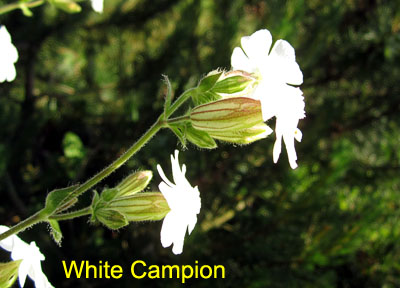
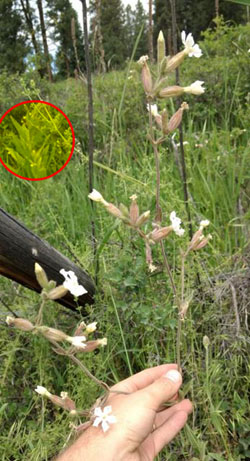
Every time I think I've found it, I find I've been fooled by this guy:
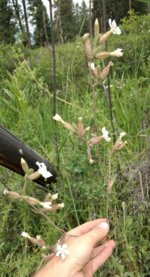

Looks like White Campion
May, 2015.
Bob
May, 2015.
Bob
ChinaVoodoo
Moderator
Looks like White Campion
May, 2015.
Bob
Amazing, Bob. Thank you, I had an element of doubt, leaving it behind. I'm glad to rule it out. I think if I find Nicotiana attenuata, there'll be next to zero doubt. I know what tobacco looks like.
ChinaVoodoo
Moderator
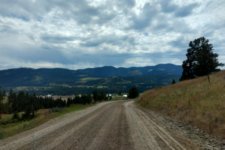
It was a long shot, but worth the adventure. I got the inside scoop on a back road. I went for a drive past some reclusive mountain shacks. I saw all sorts of interesting flowers. Maybe next time.
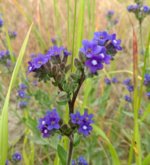
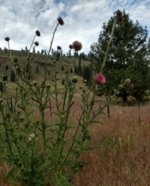
A suspect:
Bob
EDIT: Nice photos.
Bob
EDIT: Nice photos.
ChinaVoodoo
Moderator
A suspect:
Bob
EDIT: Nice photos.
Ah yes. That's mullein. There's a lot of those. The dead give away, which you can't tell from the photo, is that there's a central flower cluster. It really does look like tobacco.
Mullien is a weed in my yard that grows everywhere, even if I pick them all by the roots I'd still not get anywhere because it'd just free up room for 3 more to grow. It's a hydra.
Wooly Mullein is famous for being the perfect choice, if you need to use something natural in place of toilet paper. It's so distinctive in its appearance, you can't mistake it for something else, and...it doesn't cause a skin reaction, like poison ivy. It's also very soft and fuzzy on your tushie.
Bob
Bob
ChinaVoodoo
Moderator
The Wild tobacco search keeps on going I was looking when fishing in BC. Again one guy I talked too went out picked it and said it was very harsh.
Question is, was it picked at the right time and cured properly?
There are more than seventy species of Nicotiana. A few of them were smoked ceremonially, because they were the only species locally available. Only two specific species, N. tabacum and N. rustica were developed agriculturally (for thousands of years) because they were relatively smokable. Most of the other species of Nicotiana were not cultivated, because they taste crappy, regardless of how you cure them. Many of these have higher concentrations of truly unpleasant alkaloids.
Although there is the distant possibility that one of these lesser known species might turn out to be just wonderful, all of the seventy plus known species of Nicotiana from across the globe have been subjected to chemical analysis. So I suspect that, outside of the possible discovery of new Nicotiana species deep within the Amazon, we have a pretty good picture of the genus Nicotiana.
Bob
Although there is the distant possibility that one of these lesser known species might turn out to be just wonderful, all of the seventy plus known species of Nicotiana from across the globe have been subjected to chemical analysis. So I suspect that, outside of the possible discovery of new Nicotiana species deep within the Amazon, we have a pretty good picture of the genus Nicotiana.
Bob
ChinaVoodoo
Moderator
There are more than seventy species of Nicotiana. A few of them were smoked ceremonially, because they were the only species locally available. Only two specific species, N. tabacum and N. rustica were developed agriculturally (for thousands of years) because they were relatively smokable. Most of the other species of Nicotiana were not cultivated, because they taste crappy, regardless of how you cure them. Many of these have higher concentrations of truly unpleasant alkaloids.
Although there is the distant possibility that one of these lesser known species might turn out to be just wonderful, all of the seventy plus known species of Nicotiana from across the globe have been subjected to chemical analysis. So I suspect that, outside of the possible discovery of new Nicotiana species deep within the Amazon, we have a pretty good picture of the genus Nicotiana.
Bob
I hear you, and I agree with you....but Wikipedia(I know, I know....Wikipedia
 ) says that Nicotiana attenuata was smoked ceremonially by the Hopi, Apache, Navajo, Paiute, and Zuni. So, it's a curiosity, and I'd like to try it.
OldDinosaurWesH
Well-Known Member
Key word there "ceremonially."
Wes H.
Wes H.
The subject of pre-Columbian tobacco is discussed at length here: http://fairtradetobacco.com/threads/181-Tobacco-Varieties-Before-Columbus
From that thread, the following image indicates wild tobaccos in the northwest.
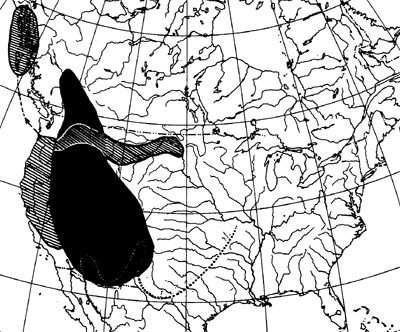
Wild tobaccos in the Northwestern Frontier. Nicotiana attenuata (black) reaches farthest north of the indigenous tobaccos; Nicotiana bigelovii (cross-hatching), a wild and semi-domesticated species in California, comes next. Also shown in cross-hatching is N. quadrivalvis which survives in North Dakota among the Mandan and Hidatsa Indians (the tribe of Buffalo Bird Woman).
"Semi-domesticated" suggest that certain native tribes cultivated the species, but that it likely found no wider market for trade. By contrast, Nicotiana rustica was not only intensively cultivated in Central America, through Mexico and up into the northeast at least as far as the Great Lakes, but the leaf from it was also widely traded.
Bob
From that thread, the following image indicates wild tobaccos in the northwest.
Wild tobaccos in the Northwestern Frontier. Nicotiana attenuata (black) reaches farthest north of the indigenous tobaccos; Nicotiana bigelovii (cross-hatching), a wild and semi-domesticated species in California, comes next. Also shown in cross-hatching is N. quadrivalvis which survives in North Dakota among the Mandan and Hidatsa Indians (the tribe of Buffalo Bird Woman).
"Semi-domesticated" suggest that certain native tribes cultivated the species, but that it likely found no wider market for trade. By contrast, Nicotiana rustica was not only intensively cultivated in Central America, through Mexico and up into the northeast at least as far as the Great Lakes, but the leaf from it was also widely traded.
Bob
ChinaVoodoo
Moderator
You know I never noticed that area in Haida Gwaii and the Pan Handle before. Very different climate from the rest of the map.
Interesting. I hadn't noticed that either.
Bob
Bob
That doesn't actually look at all like mullein - or at least not the familiar Verbascum thapsus, or the varieties native to North America that I could find, all of which have the characteristic dense, close-set spikes of *yellow* flowers that give common or wooly mullein (V. thapsus) such English folk names as "Hag's (hedge's) taper/candle" and "Aaron's rod". Now, my training in herbalism is chiefly focused on plants that are native to, or at least that I can grow, in a relatively mild Northern European climate, so it is possible that there's a North American subspecies that differs wildly from the other Verbascum spp....Ah yes. That's mullein. There's a lot of those. The dead give away, which you can't tell from the photo, is that there's a central flower cluster. It really does look like tobacco.
As for the "ancient tobacco" - regrettably the legend, and the seeds for sale attached to it, are *still* going around. Technically, this is what, in academic-land, we call "hooey". While it is just possible that, under the right circumstances - desert, permafrost, *cold* desert, unusually-sealed pots, whatever - a tobacco seed *could* survive and be germinated after a thousand years or more...they got a Judean date palm seed ca. 2000 years old to sprout and grow (which I would find highly exciting, were I a Christian)...It is *not* possible that such a thing could have happened without being *extensively documented* in the archaeological literature. Sometimes plants really are more unpredictable than people, and that is the case here. It would have been a huge find, a cause of massive excitement...not a totally undocumented attribution to different digs.
A right bummer, because on first running into the legend, I was all, "Got to get me some of this stuff!" And then I tried to track the details down, because germinating a seed that age would have left a splashy trail all through the worlds of ethnobotany and archaeology in general. There would be comparisons to the nicotine content, etc., of modern varieties of N. rust. and the cultivated tobaccos; there would be efforts made to sequence the DNA of the revived plant and see if it could be used to track trade routes and the like through the pre-Columbian Americas...such a find would be immensely useful in a number of ways.
The total absence of any literature where there should be masses says only one thing. Hooey.
I haven't tried the alleged "ancient tobacco", as I fear that no curing or aromatic smoking could rid it of the implied aroma of cattle manure. I'm growing a few "Midewivian (Midewiwan?) Sacred" plants this year, since I wanted to have a go at a rustica myself - the "sacred" part of the strain name may be what some people are calling "cultural appropriation" these days, and certainly not approved by the Cherokee Centre for Plants on the ground that if it's being offered for sale, it's not something that should be called "sacred" (http://www.southernexposure.com/tobacco-midewiwan-ceremonial-mapucho-wild-tobacco-012-g-p-768.html); but at least it's a slightly more well-meaning and considerably less deceptive name and claim than the "ancient tobacco".
- Status
- Not open for further replies.
Similar threads


-
About Us
This forum is dedicated to promoting the American tobacco farmer and tobacco home growers across the globe. Whether you grow by the acre, in your backyard, or in pots, you should find valuable and accurate information here.We discuss any variety of tobacco, as well as numerous approaches to growing, harvesting, curing, and finishing your crop. Our members will attempt to provide experience-based answers to your questions.
-
Buy raw tobacco from our Sponsor - WLT