The mastic tree

GIL

Well-Known Member
Joined
May 16, 2020
Messages
241
Points
93
Location
Romania
Incerc sa cresc cateva plante de mastic (lentiscus) pentru a incerca o cura Latakia. Problema mea este ca plantele sunt greu de adaptat climatului meu (parerea mea) sau oricare ar fi problema, cert este ca plantele isi pierd frunzele si se usuca. Și lăstarii nou crescuți se usucă. Într-un an am pierdut din numărul de plante cumpărate de la o pepinieră din Spania. Oriunde am căutat informații de cultivare nu am găsit aproape nimic, așa că am postat aici problema mea în speranța că cineva cu mai multă experiență îmi va da niște răspunsuri.

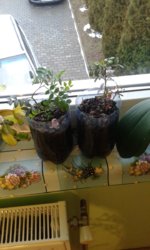
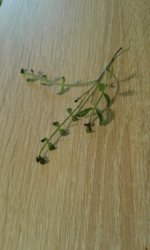
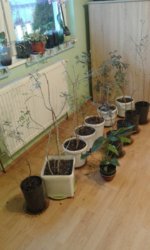
This is how my plants look at this time, I know they should have a rich, lush growth, but I have more empty stems.

[Moderator Edit]
I am trying to grow some mastic (lentiscus) plants to try a Latakia cure. My problem is that the plants are difficult to adapt to my climate (my opinion) or whatever the problem is, the fact is that the plants lose their leaves and dry up. And the newly grown shoots dry up. In one year I lost from the number of plants bought from a nursery in Spain. Everywhere I looked for cultivation information I found almost nothing, so I posted my problem here in hopes that someone with more experience could give me some answers.
[/Moderator Edit]
 

Attachments
  • 20240118_152306.jpg
    20240118_152306.jpg
    146.5 KB · Views: 12
  • 20240118_152404.jpg
    20240118_152404.jpg
    153.7 KB · Views: 12
  • 20240118_152601.jpg
    20240118_152601.jpg
    136.9 KB · Views: 12
Last edited by a moderator:

GIL

Well-Known Member
Joined
May 16, 2020
Messages
241
Points
93
Location
Romania
Pistacia Vera is much more resistant than P. Lentiscus. I have some terebinth plants (pistacia terebinthus), well they have no problem (although they grow very very slowly)
 

Knucklehead

Moderator
Founding Member
Joined
Oct 18, 2012
Messages
12,777
Points
113
Location
NE Alabama
Did you look at the roots that died?
Was there anything different about the ones that survived? A common denominator?
I would suggest a pan under the pots to hold an inch or two of water as a reservoir so the soil can slowly take up moisture. Water can just pass straight through dry potting soil. Sometimes it takes awhile for the water to wick up into the soil. Water thoroughly then let the soil dry back out.
Do your buckets have drain holes? If not, they could be drowning.
 

GIL

Well-Known Member
Joined
May 16, 2020
Messages
241
Points
93
Location
Romania
I was extremely careful about watering, they don't like a lot of water or stagnant water. Where I've read information, minimal or no fertilization is recommended. That's what I did. Yesterday I fertilized with a fertilizer "for tropical plants", in addition I mounted a light bulb above the plants for additional light (a few hours a day). The roots of the dry plants do not they showed signs of disease (rot, fungi), but I'm not an expert, for me they were "normal".
 

deluxestogie

Administrator
Staff member
Joined
May 25, 2011
Messages
26,064
Points
113
Location
near Blacksburg, VA
While you are waiting the 5+ years for your new mastic trees to begin to produce any resin, you might consider just purchasing some "Tears of Chios", which is the dried mastic resin. It can simply be placed into a punctured foil pouch, inside a smoker.

Bob
 

GIL

Well-Known Member
Joined
May 16, 2020
Messages
241
Points
93
Location
Romania
The trees produce resin only in the south of the island of Chios, the rest is a useless bush. In fact, it is left to grow to stabilize the soil, an extract is obtained from the leaves, and an oil is obtained from the fruits, both of which have several uses. Florists use sprigs of mastic as "greens" in flower bouquets. I do not expect to harvest plant sap but some twigs I still hope to burn to fumigate the tobacco. This is what the people from the northern part of the island of Cyprus do.
The resin does not work as a flavoring agent, its aroma is too weak. Two years ago I used 500 grams of "tears from Chios", dissolved in alcohol, I applied the emulsion obtained on boiled pine wood (in two, sometimes even three waters) to remove as much as possible the specific aroma of pine. It was a bad idea.
 
Top