G’s grow log 2023

Kiwisaffer

Well-Known Member
Joined
Jul 22, 2023
Messages
90
Points
53
Location
Nz
I have been struggling to get the time to transplant all my little seedlings into their grow bags for a while. I have a little bit going on at the moment with work and some renovations.

I’m almost certain I started these seedlings a little early. I’ve trimmed them, but they are still over crowing, and now they are starting to turn a little yellow (must’ve depleted what fertilizer was in the potting mix).

Can one leave the seedlings in the tray for too long which would ultimately effect the size and quality of the plant/leaf when they are eventually planted out? Might it effect number of leaves per plant and plant height?
 

Kiwisaffer

Well-Known Member
Joined
Jul 22, 2023
Messages
90
Points
53
Location
Nz
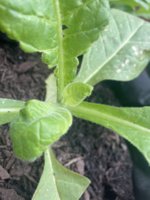
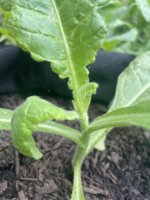
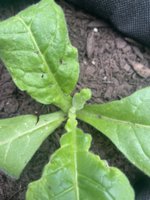
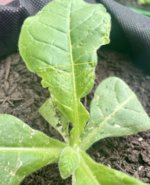
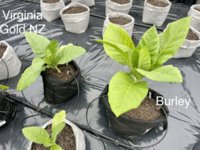
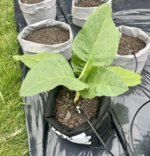
I did a trial with my rescue plants of burley (unknown nz variety) and VG and got them into some bags a few weeks ago. The new leaves are growing out wrinkled in the last week. Is this normal?
Things I’ve been considering;
1. The temperature in my glass room gets pretty warm during the day. Even if I open all the windows. Great for seedlings, unsure if it’s good as they mature.
2. Chemical injury - posts above
3. They don’t like the potting mix.
4. Not enough water
 

Attachments

  • IMG_3134.jpeg
    IMG_3134.jpeg
    195.1 KB · Views: 9
  • IMG_3133.jpeg
    IMG_3133.jpeg
    248 KB · Views: 8

Kiwisaffer

Well-Known Member
Joined
Jul 22, 2023
Messages
90
Points
53
Location
Nz
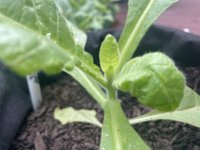
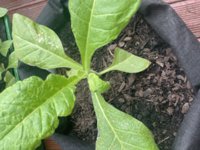
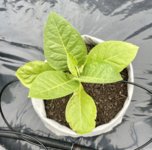
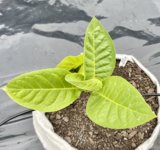
The more I look at it and the more it continues to grow; I think the new leaves must have been chemically damaged when I sprayed for the white fly. The next little growth leaf is starting to look ok (I think), and the one before it is only half damaged. The next few days will tell.
It’s like u can actually see a line on the leaf where there is damage and where there is not. I’m not sure. This is all very new to me.

I think spraying the insecticide was a knee jerk reaction. Oh well
 

Attachments

  • IMG_3145.jpeg
    IMG_3145.jpeg
    142.8 KB · Views: 9
  • IMG_3146.jpeg
    IMG_3146.jpeg
    161.6 KB · Views: 9
  • IMG_3147.jpeg
    IMG_3147.jpeg
    130.9 KB · Views: 8
  • IMG_3148.jpeg
    IMG_3148.jpeg
    276.2 KB · Views: 8
  • IMG_3150.jpeg
    IMG_3150.jpeg
    203.9 KB · Views: 8
  • IMG_3151.jpeg
    IMG_3151.jpeg
    219.8 KB · Views: 8
  • IMG_3149.jpeg
    IMG_3149.jpeg
    215 KB · Views: 9

Kiwisaffer

Well-Known Member
Joined
Jul 22, 2023
Messages
90
Points
53
Location
Nz
Things have been quite busy in my world but I’ve finally started planting out into the bags. Just doing a few each night after work.

I moved away from the grocery type bag (grow bag) and managed to source some geo-fabric that is used for soak pits to let water infiltrate the ground. It is still a plastic type material, non-woven and porous. Got some sewn up and will see how they go.
I started too many seedlings and too many varieties (I’m sure some of you would’ve picked that up already, typical beginner) so I’ve decided to plant out between 4 and 5 of each variety as I only have a total of 50 bags. Will see which varieties I really like and slim down on the choice next year.

Will keep the remaining seedlings going in the trays in-case I have some transplants die, but they’re really wanting to break free. Cells are too small to contain them and they’re growing all over each other.

Designed the bags around 15ltr volume total, then fold the edges over and fill with 10ltr potting mix per bag/plant. Potting mix has some slow release fertilizer mixed up in it. I Have been collecting coffee grinds for the past few weeks at home and from the machine at work and have decided that I’ll add 2 cups of coffee grinds to some bags as a trial. I thought the coffee grinds might lower the pH slightly as I read somewhere in here that these plants like slightly more acidic soils. ?? Any one had experience using coffee grinds.
I haven’t finished planting out yet, so if someone can tell me I’m making a mistake with the coffee then I’ll stop it for the rest of the bags.
 

Attachments

  • IMG_3241.jpeg
    IMG_3241.jpeg
    146 KB · Views: 9

deluxestogie

Administrator
Staff member
Joined
May 25, 2011
Messages
26,224
Points
113
Location
near Blacksburg, VA
"Tobacco is able to adequately absorb required nutrients from the soil if the soil acidity has a pH in the range of 5.8 to 6.2 (max 6.5)."
Me.

"Contrary to popular belief, it's a myth that coffee grounds are acidic and will lower the pH of the soil. After brewing, the grounds are close to pH neutral, between 6.5 and 6.8."

Bob
 

Kiwisaffer

Well-Known Member
Joined
Jul 22, 2023
Messages
90
Points
53
Location
Nz
Thanks Bob. So doesn’t look like it adds as much value as I was thinking. Probably better just going into the compost pile from here on, as the article says.
I’ll continue to watch what I’ve planted for any appreciable differences as I have the same varieties planted next to each other, some with coffee grinds, some without.
 

deluxestogie

Administrator
Staff member
Joined
May 25, 2011
Messages
26,224
Points
113
Location
near Blacksburg, VA
Chlorine is not much of an issue when starting plants. After transplant to the field, excess chlorine decreases the combustibility of the cured leaf. If you can smell the chlorine in the water, it indicates that chlorine is volatilizing into the air. Filling a container with chlorinated water, then allowing it to sit, open to the air, reduces its chlorine content.

Bob
 

Kiwisaffer

Well-Known Member
Joined
Jul 22, 2023
Messages
90
Points
53
Location
Nz
I have some whiteflies and winged aphids starting to congregate on my transplants, and I’m struggling to get my hands on some imidacloprid (as @deluxestogie recommends elsewhere), without ordering commercial quantities. Are there any other insecticides that would work instead? Would soapy water (dishwashing liquid) work? What dilution?

The slugs and snails are preferring my wife’s veggies than the tobacco and we’ve gone out for the past couple of nights and picked them off the plants to reduce the colony. So just the aphids and whitefly to deal with for now
 

Knucklehead

Moderator
Founding Member
Joined
Oct 18, 2012
Messages
12,777
Points
113
Location
NE Alabama
Imidacloprid is added in the transplant water when you set out your seedlings and works it's way up through the roots. Spraying the leaves with it is not recommended because it is deadly to pollinators like bees. It is safe for pollinators if used in the soil to the roots.
I used dish washing soap in the beginning. You have to spray it good on the aphids themselves. It washes off some kind of protective coating on their bodies which makes them vulnerable to colds, flue, covid, body odors, etc. Okay I'm exaggerating a little bit on some of it. The thing I didn't like was spraying with a hand squeeze spray bottle. It wore my old hands out. I got a small pump up sprayer and that was better but you need one hand to hold up each leaf to spray the underside of the leaves while using the sprayer with the other hand. So you need a hand sprayer that you can manage with one hand without being too heavy filled with water. That means refilling the sprayer quite often, or use a pump up sprayer with a long enough hose.
 

Kiwisaffer

Well-Known Member
Joined
Jul 22, 2023
Messages
90
Points
53
Location
Nz
Thanks @Knucklehead
Can one make the soapy solution too soapy and then it has a detrimental effect in the plant?
I have a little pump up spray bottle which I’ll use later to spray the little plants, once the sun has gone.

Do u think the soapy solution would work on the whiteflies too?
 

deluxestogie

Administrator
Staff member
Joined
May 25, 2011
Messages
26,224
Points
113
Location
near Blacksburg, VA

As I recall (from 10 years ago), I squirted maybe a teaspoon (5 cc) of Dawn dish detergent into an 8 ounce (~237 cc) spray bottle, then filled it with water to dissolve it.

Bob
 

Kiwisaffer

Well-Known Member
Joined
Jul 22, 2023
Messages
90
Points
53
Location
Nz
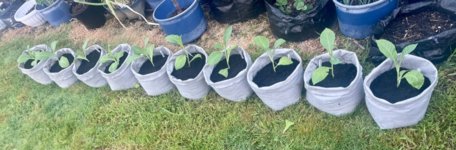
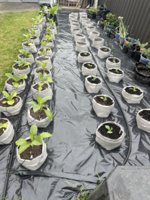
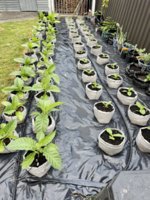
Just a quick update on the transplants. I think they have taken. Have watered them a few times now but not much. Temps haven’t really risen yet, still sitting in the high teens early 20s. There was a frost predicted for last Sunday (very late), but things only dropped to about 3-4 deg, so a bit of a relief.
One big lesson I’ll take from this year is that I started my seedlings too early. Some grew to tall and spindly in the trays and it has taken some time for their tall storks to toughen up in the bags. They were very floppy when I did the transplant and I really thought I was going to have to stake them the next day.
The only place I could plant them has solid fence on the west side and a double story building on the east. So they start seeing sun at around 10am and then the shade is starting on them again at about 15h00. Hope that is enough.
 

Attachments

  • IMG_3332.jpeg
    IMG_3332.jpeg
    309.6 KB · Views: 9
  • IMG_3336.jpeg
    IMG_3336.jpeg
    253.4 KB · Views: 9
  • IMG_3321.jpeg
    IMG_3321.jpeg
    330 KB · Views: 8
  • IMG_3335.jpeg
    IMG_3335.jpeg
    257.6 KB · Views: 8
  • IMG_3334.jpeg
    IMG_3334.jpeg
    242.2 KB · Views: 8
  • IMG_3333.jpeg
    IMG_3333.jpeg
    289.7 KB · Views: 9

Kiwisaffer

Well-Known Member
Joined
Jul 22, 2023
Messages
90
Points
53
Location
Nz
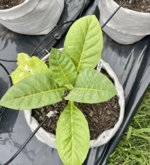
Quick update. One week on and you can see the growth rate picking up

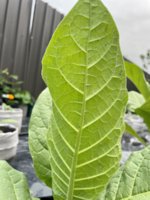
There are tiny little black flying bugs that are getting trapped in the leaf hairs. Are these gnats coming from the potting mix? Can see a difference between them and of the winged aphids. Don’t think these black flying bugs are eating the leaf??

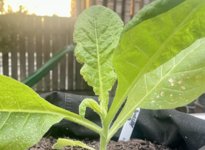
I think all are looking healthy and getting strong. Plants are suckering a lot at the moment. Think this could be a function of how early I planted them and hence just the age of the plants?? Can anyone confirm that theory or put it to bed?
 

Attachments

  • IMG_3378.jpeg
    IMG_3378.jpeg
    332.9 KB · Views: 14
  • IMG_3380.jpeg
    IMG_3380.jpeg
    160.6 KB · Views: 14
  • IMG_3379.jpeg
    IMG_3379.jpeg
    162.7 KB · Views: 14
  • IMG_3381.jpeg
    IMG_3381.jpeg
    289.8 KB · Views: 15
Top