Is "Oily" wrapper actually oily?

Status
Not open for further replies.

deluxestogie

Administrator
Staff member
Joined
May 25, 2011
Messages
26,577
Points
113
Location
near Blacksburg, VA
I'm requesting that anyone who has a cigar that seems to display an "oily" sheen to run this experiment, and post your results.

Our brains visually determine the nature of materials by how diffuse the specular reflection appears to be. The specular is that zone on a curved surface that concentrates the reflection of ambient light. When it is absent, we perceive a "dull" material. When it is tiny or narrow, with very sharp edges, we perceive a glassy surface. Various gradations in between suggest to our brains what material we are looking at.

With cigar wrapper, I generally consider an "oily" appearing cigar to be the result of excellent wrapper stretch, which simply removes most of the tiny wrinkles from the surface. But sometimes, I think of it as actual "cigar oils", which I suspect is not correct. Most likely, our descriptions of "oily" leaf are metaphorical, yet somehow trick us into believing the metaphor.

Experiment: Place an "oily" cigar onto a piece of coffee filter paper or paper towel overnight. Remove the paper, and allow the paper to fully dry. Report in this thread whether or not you see actual oil remaining on the paper. (Who knows. There may be a Nobel Prize in it.)

Bob
 

waikikigun

Well-Known Member
Joined
Mar 24, 2015
Messages
1,453
Points
113
My guess is cigar specularity could be influenced by oils since they'd fill in the wrapper texture's pits. But even the driest surface can be maximally specular if it's smooth. Hard to imagine a mirror would become more specular if it were oiled up. And specular means mirror-like.
 

dubhelix

Well-Known Member
Joined
Jan 17, 2014
Messages
178
Points
93
Location
Central Virginia
I always figured “oily” wrapper just had a lot of smashed-up resin from the trichomes on it from the handling and aging process of the leaf.
 

deluxestogie

Administrator
Staff member
Joined
May 25, 2011
Messages
26,577
Points
113
Location
near Blacksburg, VA
The "bee" in these images is the exact same 3-D model. Altering surface roughness and the specular reflection size and crispness alters how we percieve the "material" it's made of.

Here, the bee--its legs in particular--appears to be made of plastic.

Bee_crisperSpecular.jpg


In this version, the bee' surface has a barely detectable specular, and a "rough" surface, suggesting something coarser than plastic.

Bee_rough_minimalSpecular.jpg


And finally, this bee has a tight, crisp specular, as well as translucency. So we see it as made of glass.

beeOfGlass_trans_smallSpecular.jpg


There is, of course, no object there at all, only math.

Bob
 

Yvan the terrible

Well-Known Member
Joined
May 3, 2019
Messages
67
Points
53
Location
Edmonton, Alberta
Glossiness is a perception, water as no oil in it but is glossy. Wet a very dull looking wrapper and it will become very shinny (while it is wet). Your mirror has no way to absorb oils to increase its specularity but your wrapper does. I personally have been wondering if some cigar manufacturers were adding compounds to their wrappers to make them so shinny, it is hard to imagine a leaf after the drying and fermentation process being able to retain much of its glossiness naturally.
 

deluxestogie

Administrator
Staff member
Joined
May 25, 2011
Messages
26,577
Points
113
Location
near Blacksburg, VA
it is hard to imagine a leaf after the drying and fermentation process being able to retain much of its glossiness naturally.
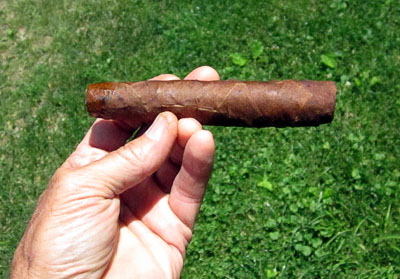
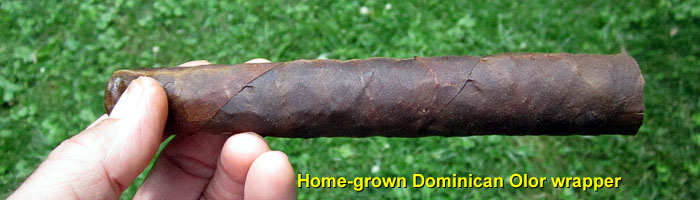
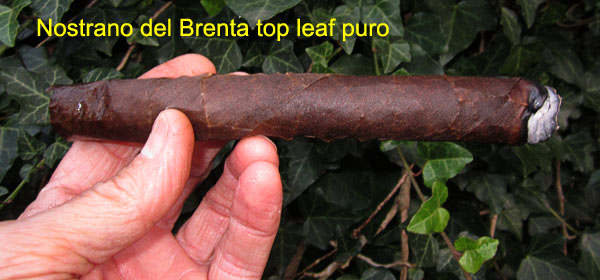
They do. Commercial ones do. Some of my home-grown does as well. It depends on the variety, priming level, luck of the draw, etc.

Cigar_IzmirOzbas_Ootz20120315_108_close_300.jpg

2012. Izmir Ozbas

Garden20140609_1212_MachuPicchuPuroCigar_400.jpg

2014 Machu Picchu Havana

Garden20140710_1323_cigar_DomOlorOscuroWrapper_700.jpg

2014 Dominican Olor

Garden20150609_1823_cigar_HaciendaDelCura_600.jpg

2015 Hacienda del Cura

Garden20150823_2047_cigar_SwarrHibshman_wrapper_400.jpg

2015 Swarr-Hibshman

Garden20160904_2265_cigar_FLSumatra_wrapper_500.jpg

2016 Florida Sumatra

Garden20161217_2389_cigar_Corojo99secoPuro_600.jpg

2016 Corojo 99 (Robaina)

Garden20170526_2656_cigar_Nostrano_wrapper600.jpg

2017 Nostrano del Brenta

Garden20170916_3068_cigar_NostranoDelBrenta_topLeafPuro_600.jpg

2017 Nostrano del Brenta

No oils added.

Bob
 

Yvan the terrible

Well-Known Member
Joined
May 3, 2019
Messages
67
Points
53
Location
Edmonton, Alberta
Wow, very interesting, thanks for sharing the pictures. Another thing that I was wondering is how much are the natural sugars of the plant able contribute to the leaf glossiness? Fermentation most contribute converting the carbohydrates into some forms of sugars which would give the leaf some shine?
 

deluxestogie

Administrator
Staff member
Joined
May 25, 2011
Messages
26,577
Points
113
Location
near Blacksburg, VA
Carbohydrates, both simple and complex, are mostly eliminated during curing, so, in cigar leaf in particular, there is nearly no sugar remaining. These are both oxidized into CO2 and water, as well as converted into simple salts.

On archive.org, you can find: Loew, O: Curing and Fermentation of Cigar Leaf Tobacco, USDA Report #59, Washington, 1899. This is an interesting read. The chemistry is over a century old, but still pretty much holds.

Bob
 

FmGrowit

Head Honcho
Staff member
Joined
May 17, 2011
Messages
5,313
Points
113
Location
Freedom, Ohio, United States
The only noticeable sheen or gloss I've ever seen on wrapper leaves has been on Maduro wrapper, but I'm going to give the other a good look tomorrow. A lot of ripe tobacco will have a gummy, sticky substance on the leaf. Perhaps this gum polishes up to a nice sheen.
 

MarcL

Well-Known Member
Joined
Mar 11, 2013
Messages
4,413
Points
113
Location
Central Maryland
I'd guess it's oil of a sort. "Plants use excess energy to make fatty acids and glycerol and combine them to make the triglycerides and store it for later use. Oil is useful for plants because it has more energy by weight than glucose which they store as starch."
The thicker it is the more I need to wash my hands. Some leaf oil comes rite off with a towel.
https://i.imgur.com/QzqVTF8.png
 

ChinaVoodoo

Moderator
Joined
Sep 1, 2014
Messages
7,220
Points
113
Location
Edmonton, AB, CA
We all know your hands turn black when processing un cured leaf. I was destemming a few pounds of air cured and aged kilned Delhi34, and my hands turned black. I never noticed that before, but then again, I may have not processed so much high case leaf in one go before.

What is the black stuff?
 

deluxestogie

Administrator
Staff member
Joined
May 25, 2011
Messages
26,577
Points
113
Location
near Blacksburg, VA
I suspect that the black goo that gets on your hands when handling raw or fully cured, aged, kilned leaf is from the nicotine solution that subsequently oxidizes on your skin. There's other stuff in that solution, causing it to be sticky. Maybe it's oil, maybe just other compounds that are dissolved.

Anybody do the paper filter test yet? I have not, but plan to with a rosado wrapper. (When I roll one, then smoke one, there is no "resting" time to loll in a filter.)

Bob
 

ChinaVoodoo

Moderator
Joined
Sep 1, 2014
Messages
7,220
Points
113
Location
Edmonton, AB, CA
Not a part of the experiment, but I did look... I made a small carotte with some KY17 that had an oily sheen. I wrapped the tobacco in white "interleaf" paper that x-ray film comes in. I compressed the crap out of the paper-wrapped tobacco with fiberglass tape, like these made with Goose Creek Red, (that doesn't appear oily.)
DSC_0884~2.JPG
I unwrapped the KY17 one and I didn't notice any absorption.

Not conclusive because this paper is not necessarily very absorbent, and I didn't look very hard.

Consider this post anecdotal.
 

deluxestogie

Administrator
Staff member
Joined
May 25, 2011
Messages
26,577
Points
113
Location
near Blacksburg, VA
If an oily smudge does show up on a wrapping paper, I'm not sure how one might test it to determine if it's oil or just a stain of something else. Ah...the quandaries of science.

Bob
 

DePasta

Well-Known Member
Joined
Oct 27, 2018
Messages
51
Points
33
Location
Louisville, KY
I just don't think there is enough saturation to show up on paper, like a french fry would. I think looking at the countless boxes I have opened over the years and stored cigars in, I don't ever recall any significant oil marks where the cigars came in contact with the box. Only staining I have seen are on highly aged sticks that seems to come from interaction between the moisture and the tobacco. Maybe compressing the leaf under high pressure like a grape press would help extract any oils.
 

FmGrowit

Head Honcho
Staff member
Joined
May 17, 2011
Messages
5,313
Points
113
Location
Freedom, Ohio, United States
I think there would be a stronger likelihood of oil being present in ripe/mature tobacco. The ripest tobacco we stock is Dark Air. I'm going to shred a 1/4 lb. and boil it for a couple hours. If there is any oil, it should separate to the top and should be visible in the glare of light.
 

TigerTom

Well-Known Member
Joined
Apr 27, 2017
Messages
350
Points
93
Location
Sacramento, Ca
I think there would be a stronger likelihood of oil being present in ripe/mature tobacco. The ripest tobacco we stock is Dark Air. I'm going to shred a 1/4 lb. and boil it for a couple hours. If there is any oil, it should separate to the top and should be visible in the glare of light.

Any results on this experiment?
 

CobGuy

Well-Known Member
Joined
Dec 22, 2015
Messages
1,041
Points
113
Location
Central Arizona
I've opened many aged tins of pipe tobacco to find the inner paper completely saturated with oils.
This usually is seen at around 15 years of storage.

nbtZIZw.jpg
 

CobGuy

Well-Known Member
Joined
Dec 22, 2015
Messages
1,041
Points
113
Location
Central Arizona
Sorry ... this site is more difficult than any other for pics and I don't know why.
Sometimes it works (as you've seen from other posts of mine) and sometimes not.
 
Status
Not open for further replies.
Top