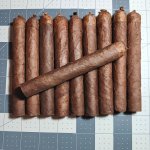
What is Mexican San Andres

Joined
Apr 23, 2026
Messages
12
Points
3
Location
Canada
I've been trying to figure out what San Andres wrappers are. Originally, it seemed to be one of the following:
1. Tobacco grown in a specific region:
As per the name. It has the growing region in the name, which would imply it's simply tobacco that's grown in the San Andres region.
2. A specific variety of tobacco:
I've seen other tobacco leaves grown in a specific region (e.g. Ecuador) also can specify the variety in the name (e.g. Ecuadorian Corojo wrappers). I've never seen MSA wrappers marketed with any variety in the name, it's always "San Andres" or "Mexican San Andres". This would imply that San Andres is a variety of tobacco
3. A method of processing/color grade:
All the MSA cigars I've smoked had distinct dark colour. I've seen more variation in "maduro" color label than I have with MSA. I've seen mentions on this forum that a flame is used to manage humidity of curing MSA leaves.

After some digging, it appears that MSA is all of the above? Can anybody here shed some light on this mysterious (to me, at least) wrapper?
 

Tutu

Well-Known Member
Joined
Jun 9, 2016
Messages
792
Points
93
Location
Dominican Republic
It’s the variety that is grown in San Andres Tuxtla. Been there several times to deal with farmers / leaf dealers. It’s the variety that has been grown around that area for a long time. Not the only variety, as farmers also grow Habano, and Sumatra. San Andres, all sometimes referred to as Negro San Andres is typically sought for to make maduro cigars, often substituted for Broadleaf when BL is hard to find. One of the interesting characteristics for me is that it San Andres always seems to hold humidity less well, it dries out quicker then other tobaccos do. Lasioderma love San Andres…
 

WillQuantrill

Well-Known Member
Joined
Aug 21, 2022
Messages
422
Points
93
Location
Missouri
I've been trying to figure out what San Andres wrappers are. Originally, it seemed to be one of the following:
1. Tobacco grown in a specific region:
As per the name. It has the growing region in the name, which would imply it's simply tobacco that's grown in the San Andres region.
2. A specific variety of tobacco:
I've seen other tobacco leaves grown in a specific region (e.g. Ecuador) also can specify the variety in the name (e.g. Ecuadorian Corojo wrappers). I've never seen MSA wrappers marketed with any variety in the name, it's always "San Andres" or "Mexican San Andres". This would imply that San Andres is a variety of tobacco
3. A method of processing/color grade:
All the MSA cigars I've smoked had distinct dark colour. I've seen more variation in "maduro" color label than I have with MSA. I've seen mentions on this forum that a flame is used to manage humidity of curing MSA leaves.

After some digging, it appears that MSA is all of the above? Can anybody here shed some light on this mysterious (to me, at least) wrapper?
Similar to the St James Perique conundrum. Its even more confusing that a geographic location is in the name. If the San Andreas seed is grown in DR can it still be called "Mexican" or does Gurkha's patent attorneys get involved? Haha
 

deluxestogie

Administrator
Staff member
Joined
May 25, 2011
Messages
26,121
Points
113
Location
near Blacksburg, VA
I used to occasionally enjoy the unique taste of Te Amo cigars as a change of pace from my preferred Honduran cigars. The Te Amo cigars were essentially Negro San Andres puros—filler, binder, wrapper. They were rich and potent.

Then Cigar Aficionado magazine entered the picture in the 1990s, with its rating system. The raters didn't like Te Amo. So eventually, Te Amo cigars went extinct as a direct result.

There are now cigars branded as Te Amo, but they are wrapped in Habano wrappers: a different cigar.

Bob

EDIT: I should add that the cigars that I rolled from San Andres leaf that I grew simply tasted like a generic, nice cigar. They lacked the tang of the traditional, fire curing used in Mexico.
 
Joined
Apr 23, 2026
Messages
12
Points
3
Location
Canada
I used to occasionally enjoy the unique taste of Te Amo cigars as a change of pace from my preferred Honduran cigars. The Te Amo cigars were essentially Negro San Andres puros—filler, binder, wrapper. They were rich and potent.

Then Cigar Aficionado magazine entered the picture in the 1990s, with its rating system. The raters didn't like Te Amo. So eventually, Te Amo cigars went extinct as a direct result.

There are now cigars branded as Te Amo, but they are wrapped in Habano wrappers: a different cigar.

Bob

EDIT: I should add that the cigars that I rolled from San Andres leaf that I grew simply tasted like a generic, nice cigar. They lacked the tang of the traditional, fire curing used in Mexico.
I'm guessing those ratings were taking seriously back in the day. Today, these ratings seem like white noise to me
 

WillQuantrill

Well-Known Member
Joined
Aug 21, 2022
Messages
422
Points
93
Location
Missouri
What's the story about Gurkha's patent lawyers?
Gurkha Cigar, according to the interwebs, has 105 blends it puts out every year. While the marketing imagery is appealing, I would imagine it becomes difficult to come up with distinct names after 30-40. In 2023 they sued Davidoff for using "Dragon" in a blend saying in the world of cigars they owned the trademark. Given that it was in reference to "Year Of The Dragon" my personal opinion is that it was more about muscling out market share in Asia. While I hear tell Gurkha was top notch 30 years ago, these days they are known as a marketing company that happens to sell cigars. My personal experience with most of their blends would confirm that.
 

OrlandoJoe

Member
Joined
Apr 25, 2026
Messages
17
Points
3
Location
Florida
Always going to prefer Broadleaf over San Andres as well, by a mile. I’ve always liked using it as a filler much more than anything else.
As a cigar smoker, I appreciate the sweetness of both Connecticut Broadleaf, and San Andreas (used to be called just 'Mexican'). I am nothing remotely an expert. I have an untrained palate, and for me, Broadleaf has more complexity, and the San Andres seems to me to appear in more affordable cigars as filler and binder. Maybe a function of the cost to grow?
 
Joined
Apr 23, 2026
Messages
12
Points
3
Location
Canada
But nobody has seeds. However, Don has 100 lb of wrappers. https://wholeleaftobacco.com/collections/cigar-wrapper-binder/products/san-andres-wrapper

So what tobacco of Don's could I fill this with to make a mild to medium cigar?
Sorry friend, you're asking the wrong guy, I got 0 rolling or blending experience. This is my first season of growing, and I won't get my hands on whole leaf tobacco until later in the year, when I visit a friend in the states. Shipping to Canada is extremely expensive.
 

ShiniKoroshi

Dept. of Shenanigans
Joined
Nov 18, 2024
Messages
456
Points
93
Location
Florida
Sorry friend, you're asking the wrong guy, I got 0 rolling or blending experience. This is my first season of growing, and I won't get my hands on whole leaf tobacco until later in the year, when I visit a friend in the states. Shipping to Canada is extremely expensive.
Yeah, sucks being a smoker in Canada, hopefully all that will change one day. But the question was for the broader audience who has more experience.

Searching "Andres" here turned up a lot of results, the consensus being that home grown won't be the same because of differences in curing and fermentation. Connecticut Broadleaf and Corojo 99 seemed to be favored instead. Honestly, I would look at varieties developed in the north for growing in Canada. This one in particular caught my attention as it was developed in Canada.
http://nwtseeds.com/L'Assomption.htm
 
Top