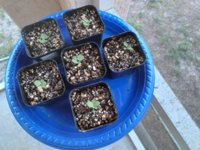
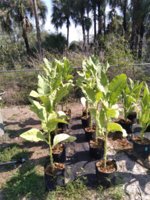
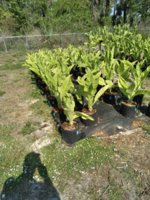
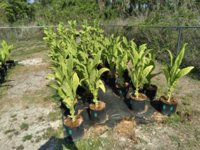
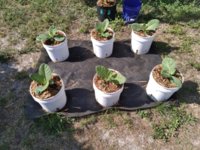
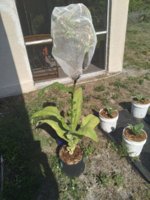
Good timing on the BT. Those tiny hornworms appear to be only about 1 day old. Yesterday, they were innocent newborns.
Bob
Bob


It is a nice place to live if you love to garden. Most years we do not have any freezing weather at all, so you can do some sort of outdoor gardening year-round. The downside is that most of the time it's so hot and humid that you don't feel like doing it.You are allready priming leaves and I have not yet planted, here the ground is still frozen and I am expecting six or seven weeks to pass before I can put the plants outdoor.
What a great place you have there!
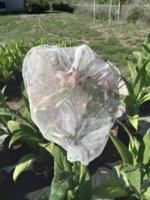
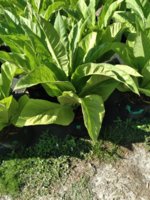
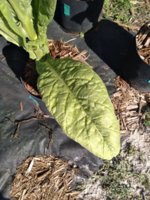
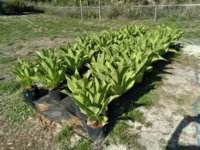
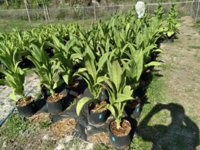
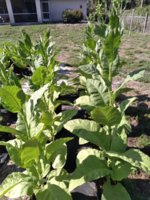

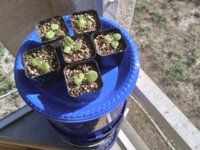


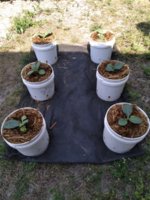
The only time I've ever had a problem was when I did not use pure cypress mulch, that season, the plants did not get as large and had more brown spot and disease than usual. Cypress is much more resistant to rotting and decomposition than most other wood. I've never taken ph readings, so I just assume that the combination of cypress mulch and MG for tomatoes must be in the proper ph range for tobacco.Ok-cypress mulch with miracle grow and epsom salts.
You never get any nutrient deficiency or ph problems?
In Germany, I might try conifer bark mulch and whatever tomato fertilizer I can find (“triple 20” miracle grow isn’t allowed here- I’ve never seen an npk number higher than 6!).
Any idea on what your getting, yield wise, per plant?
Cypress is hard to find and expensive here.The only time I've ever had a problem was when I did not use pure cypress mulch, that season, the plants did not get as large and had more brown spot and disease than usual. Cypress is much more resistant to rotting and decomposition than most other wood. I've never taken ph readings, so I just assume that the combination of cypress mulch and MG for tomatoes must be in the proper ph range for tobacco.
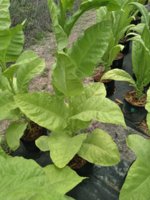
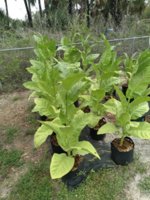
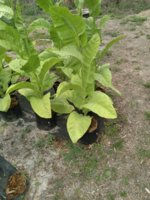
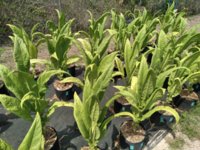
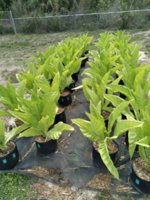
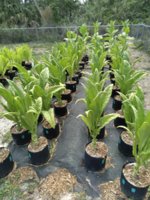
One year I grew Prilep 66/9-7 and it yielded one ounce per plant. Other 'full size' varieties usually yield about two ounces per plant, but it can vary quite a bit. Container grown plants generally will not get as large as plants grown in good, rich soil.
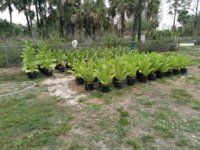
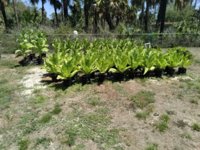
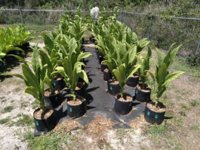
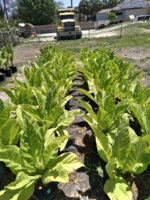
I found this method of gardening in an old publication on Florida gardening. I can't explain why it works, only that I tried it and it worked for me, so I've continued to use it. The original article recommended the use of 'nutri-sol' soluble fertilizer, which is no longer in production, so I began using MG for tomatoes and epsom salts instead. If you can't get cypress mulch nor MG for tomatoes where you live, I can't advise you on your chances of this method working for you. You might want to just try a few containers the first time and see how it turns out. Good luck!
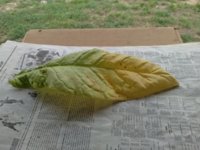
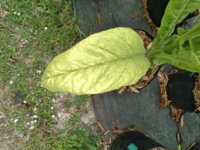

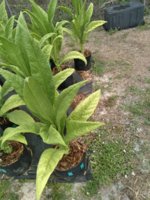
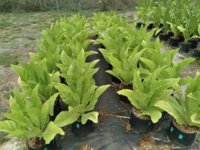
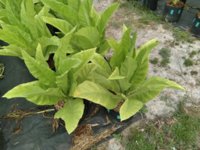


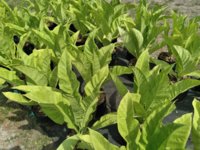
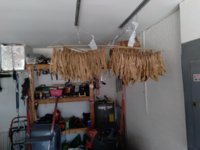
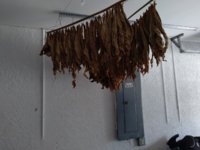
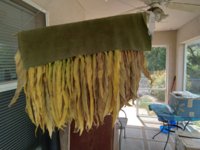

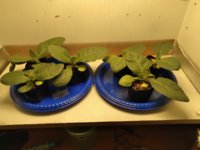

Thank you. There is still some dark green lamina near the fat part of the stem. The humidity is very low at present, so I'm keeping a damp towel draped over them until they color completely.I love following your grows!
I wonder what the towel draped over the row of leaves is for?
Those bulletins are written with multi-acre, commercial growers in mind. The actual growers always have to adapt to present conditions. With your experience, I would suggest you just go with your intuition on stalk-harvesting. The stalks themselves do a fairly decent job of slowing the leaf drying.I read a bulletin
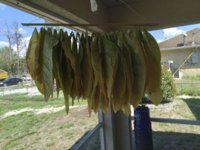
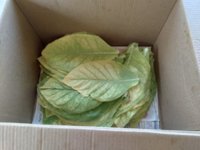
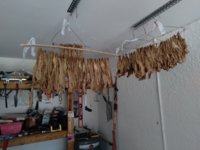
How does box color curing work?Some leaf color curing on the lanai and some coloring in a box. Once it's completely colored it will be moved to the garage for drying. One Sucker colored up pretty good after 4 days in the box. Thompson was a little slower, I may have primed it a little too early. I thinned my mystery seedlings yesterday to one per container.
The only time you need to box leaves is when the average relative humidity is low. It just allows the leaf to die and change color before it dries. If your RH is predicted to remain at or above 70% for a week or so, boxing is not necessary, just hang them as usual. All boxing does is maintain humidity until the leaf color changes to yellow or brown.How does box color curing work?
Is it light deprivation, a build up of ripening gasses (ethylene)?
How do you do it?
We discuss any variety of tobacco, as well as numerous approaches to growing, harvesting, curing, and finishing your crop. Our members will attempt to provide experience-based answers to your questions.